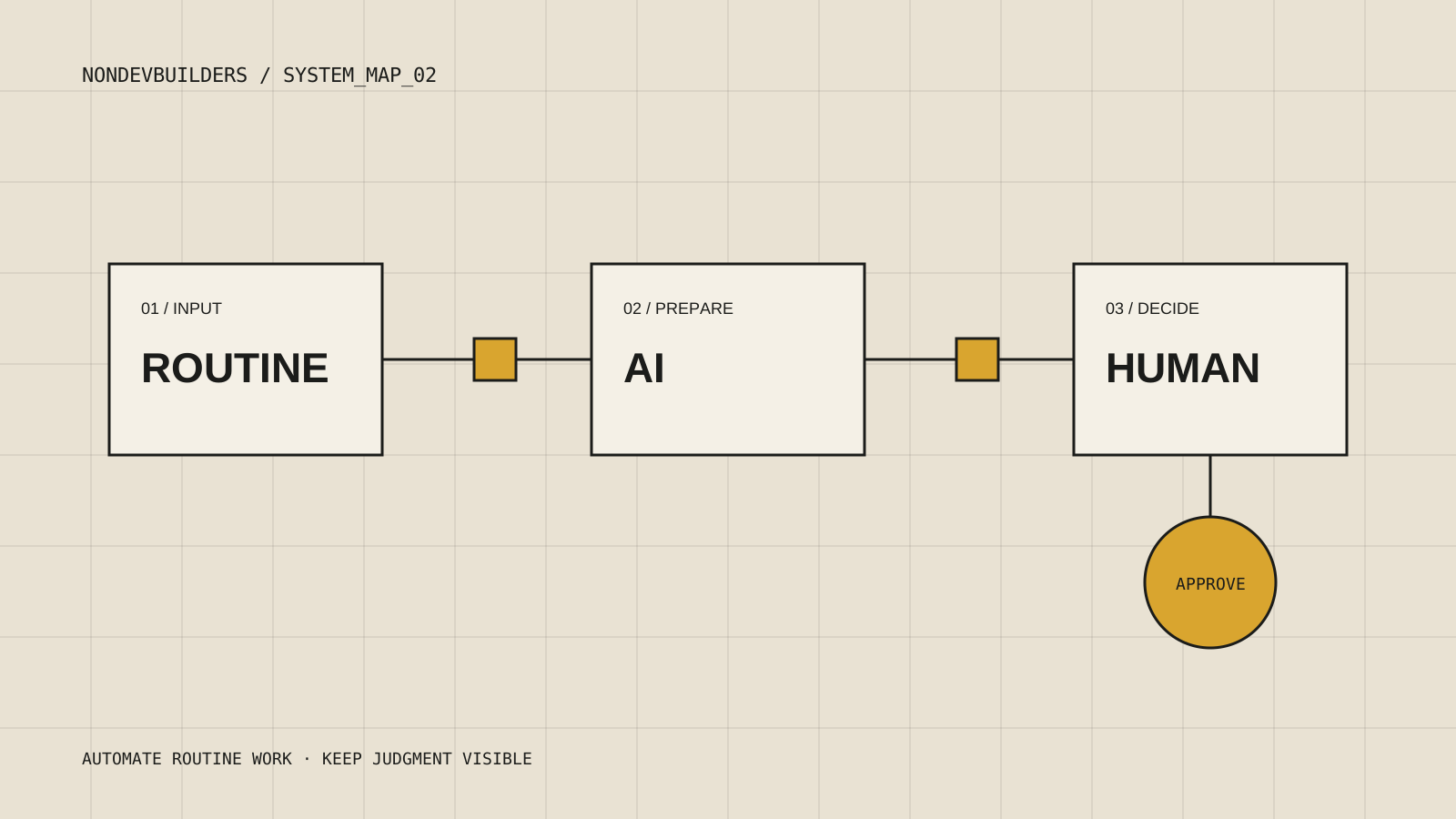
AI is useful in a small business not because it can make every decision, but because it can reduce the effort involved in routine work. It can draft a reply, organize information, summarize a document, or prepare a report. That gives people more time for tasks that require judgment, context, and responsibility.
The difficult question is not simply, “Can AI do this?” It is, “What happens if it gets this wrong?” A typo in an internal summary is inconvenient. An incorrect refund, a misleading promise to a customer, or a mistaken change to someone’s account can cause real harm.
A practical approach is to let AI handle predictable, low-risk work; use it to prepare higher-stakes work for review; and keep a person responsible for decisions that affect money, rights, safety, or trust.
Good candidates for automation
Tasks are generally easier to automate when they are repetitive, follow clear rules, and are easy to check or undo.
For example, AI can help sort incoming messages into categories such as sales inquiries, support requests, and invoices. It can extract names, dates, or order numbers from documents and place them into a draft record. It can also summarize a long email thread so a staff member can understand the history before replying.
These tasks still need sensible boundaries. If the system cannot identify a message confidently, it should send it to a person rather than guess. And if the extracted information will be used to make a consequential decision, someone should verify it.
AI can also prepare routine communications. A business might use it to draft appointment reminders, responses to common questions, or follow-ups based on approved templates. For low-stakes messages with predictable content, a business may choose to send them automatically—provided the recipient, timing, and wording follow clear rules. Messages involving a complaint, an unusual request, or a promise about price or delivery are better routed for review.
Other useful, relatively contained applications include:
- Turning meeting notes into a draft list of action items.
- Creating a first draft of a product description from approved product details.
- Summarizing customer feedback into recurring themes.
- Preparing a weekly sales or activity report from existing records.
- Reminding staff about routine steps in a process.
In each case, AI is doing the repetitive preparation. The business still sets the rules and checks whether the output is useful.
Use AI to prepare decisions, not quietly make them
Many business tasks are not fully routine, but AI can still make them faster. It can gather relevant information, compare options, flag missing details, and produce a draft for a person to assess.
Consider a customer asking for a refund. AI might find the order, summarize the relevant policy, and draft a reply. But whether to make an exception may depend on the customer’s circumstances, the history of the relationship, or the cost of getting the decision wrong. A person should make that call.
The same distinction applies to hiring. AI might organize applications against clearly stated criteria or help draft interview questions. It should not be allowed to make the final hiring decision without human judgment. A candidate’s qualifications and circumstances cannot always be fairly reduced to a checklist.
For a small business, a useful rule is: AI can prepare the recommendation, but a person should own decisions that require weighing competing interests or making exceptions. That includes choices about customer disputes, staff matters, unusual pricing, and commitments the business may be expected to honor.
Keep human approval for high-impact actions
Some actions deserve a human checkpoint even when the AI’s work looks polished. A fluent answer is not proof that the answer is accurate, complete, or appropriate.
Human approval is especially important when an action could:
- Move money, issue a refund, or change a customer’s charges.
- Make a promise about price, delivery, availability, or results.
- Affect someone’s employment, access to a service, or eligibility.
- Share confidential or sensitive information.
- Create a legal, financial, or safety commitment.
- Be difficult to reverse once it has been sent or carried out.
This does not mean a person must inspect every line of every routine message. It means the business should decide in advance which actions AI may take, which require review, and which should remain entirely with a person.
A good approval process also gives the reviewer enough context to do their job. Instead of showing only a ready-to-send answer, a system might show the original request, the information it used, and any uncertainty it noticed. If the reviewer has to reconstruct all of that themselves, the checkpoint may become a rubber stamp.
Design for mistakes before they happen
No AI workflow should depend on the assumption that the system will always understand the request. The process should make it straightforward to catch and contain errors.
Start with a narrow task and clear instructions. For instance, have AI draft replies using an approved set of policies, rather than letting it invent new terms. Limit what it can access and what it can change. If it only needs to prepare a response, it may not need permission to send it or edit customer records.
Set a clear fallback: when information is missing, the request is unusual, or the system is unsure, hand it to a person. Keep a record of what was generated and what action followed. For actions that are easy to undo, automation can be more appropriate. For irreversible actions, add a review step.
It is also worth checking the workflow after it is introduced. Look at a sample of completed tasks, note recurring errors, and change the instructions or boundaries when needed. Automation is not a one-time decision; it is a process the business remains responsible for.
A simple way to decide
Before automating a task, ask three questions:
1. Is the task predictable? If the right answer depends on context the system may not have, keep a person involved. 2. How serious would a mistake be? The greater the cost or impact, the stronger the approval requirement. 3. Can the action be undone? If not, require a person to review it before it happens.
For example, automatically sorting a message into a support queue is usually easier to contain than automatically sending a refund. Drafting a product description is safer when it draws only on verified details and someone checks claims before publication. Preparing a payment reminder is different from changing the amount owed.
AI can be a dependable assistant for well-defined work, but the business remains accountable for what it sends, promises, and does. The goal is not to add a human to every step. It is to put human judgment where it matters—and give AI the routine work that can be clearly bounded, checked, and corrected.